

Home Contact
Walmart Search Quora Accuweather
Book: Place Names of the Ojibwe In Future Codes
Mississauga First Nation
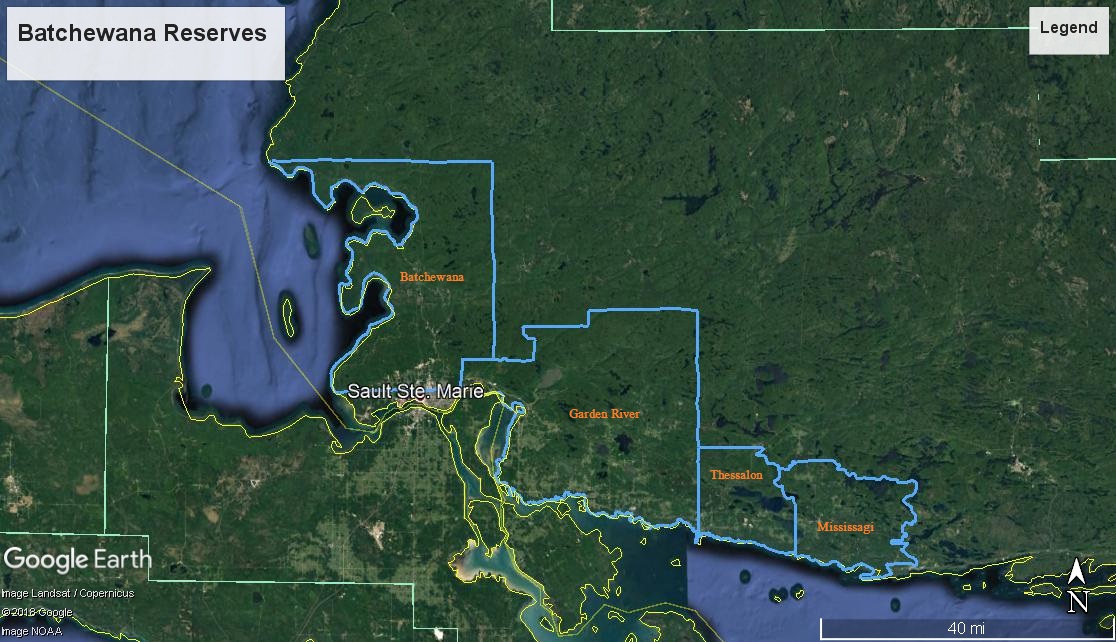
This band of Ojibway's live in northern Ontario. Below are google earth photos of this Ojibway Town. On-Reserve population of Mississauga First Nation is, according to a 2016 census, 411. They have 185 dwellings with 178 lived in. Average household size is 2.3 persons per household. Ojibway Language has died out there. Mississauga are signatories to 1850's Robinson-Huron Treaty. Chief Bonekeosh signed for Mississauga. These Ojibway's were set aside a tract of land between Mississaga River and Penebewabecong River or Blind River, up to Mississaga Rivers first rapids. Mississauga First Nation or Reserve, is really connected to Batchewana, Garden River and Thesasalon.
Map of Batchewana Reserve
Road Closeup
Road Closeup
Road Closeup
Road Closeup
Road Closeup
Road Closeup
Road Closeup
Road Closeup
Road Closeup
Mica Bay Rebellion of 1849
This incident led to 1850's Robinson-Huron and Robinson-Superior Treaties. In 1849, white mining companies established mines at Mica Bay which was quickly learned of by Ojibway leaders. They sent many Ojibway Soldiers to those mines to destroy them. In response, England sent over 100 soldiers to put this rebellion down. It led to 1850's Robinson-Huron and Robinson-Superior Treaties. Ojibway Soldiers were led by chief Shing-wa-cos (Garden River) and chief Ne-be-nai-goch of Batchewana. White Soldiers had repeating rifles and revolvers yet Ojibway Soldiers stood their ground. Michipicoten (Gros Cap), Mississaga and Thessalon were also involved. A Treaty agreement was reached in 1850, to set aside a large Ojibway Reservation along Lake Superiors eastern shores and Lake Huron's northern shores. Whites deliberately wrote that their Reserve was so many miles this way and that way. However, Ojibway leaders considered 1 mile to be 1 league or 3 miles. This Ojibway Reserve is very large and yet exists. We don't recognize 1859's Pennyfather Treaty. It's fraudulent.