Ojibwa AI Videos ___ Walmart ___ Amazon
Ojibwa Prophesy ____ Ebay ______ TV Playlists
Montana Ojibwe Reservations and their Communities Book
Minnesota Ojibwe Reservations and their Communities Book
Place Names of the Ojibwa in Future Codes Book

Anishinabe History
Ojibwa AI Videos ___ Walmart ___ Amazon
Ojibwa Prophesy ____ Ebay ______ TV Playlists
Montana Ojibwe Reservations and their Communities Book
Minnesota Ojibwe Reservations and their Communities Book
Place Names of the Ojibwa in Future Codes Book
Crow-Northern Cheyenne Reservation
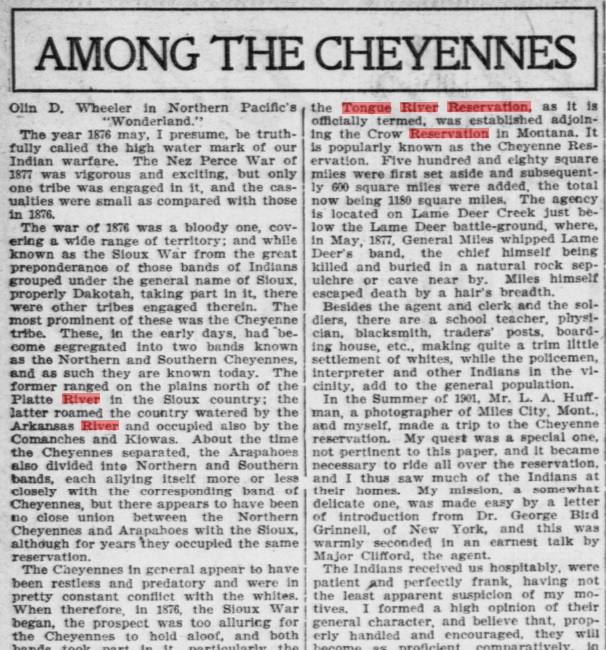
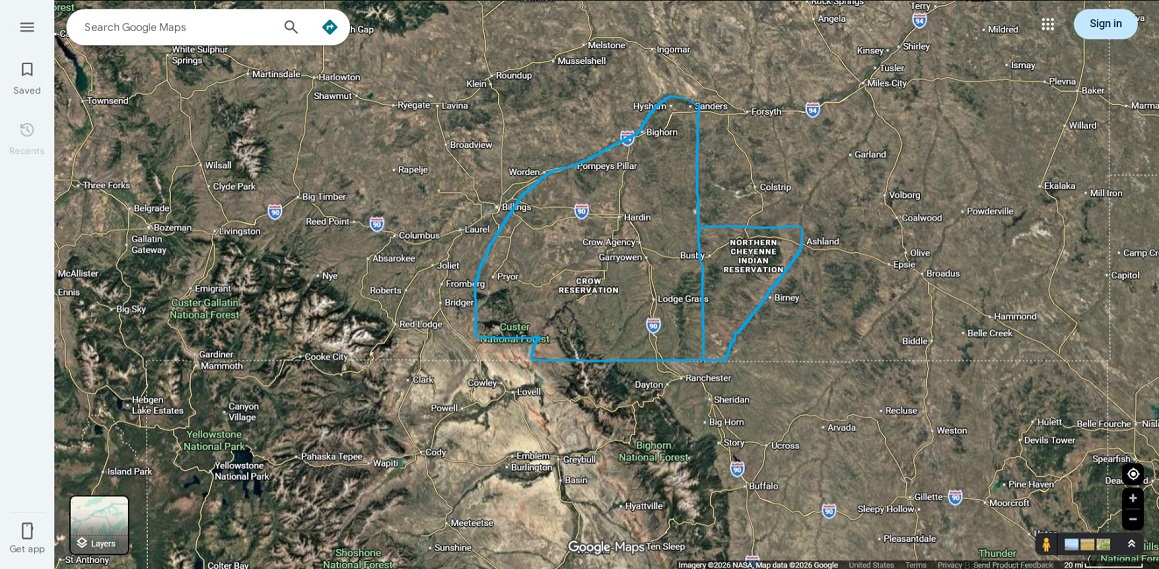
It is or they are, one of chief Rocky Boys Reservations. Below are links to google maps photos of several communities of Crow/Northern Cheyenne Reservation. Among Montana's six Native American Reservations, is Crow/Northern Cheyenne Reservation. These Reservations are same Reservation. Since both Reservations are connected, it obviously means that they are one Reservation. In 1875, Crow leaders and Northern Cheyenne leaders met to negotiate Reservation boundaries. It's proof of Northern Cheyenne People already living at this Reservation before 1875. Leaders of Crow Reservation are allowing whites to invade and colonize their nation. I'm referring to Forty Mile Colony which is a Hutterite Colony. I know Crow Reservation leaders will not allow Rocky Boy Tribe of Ojibwa's to establish colonies within their Reservation. They yet allow whites to invade. After American leaders commenced to utilize 1887's filthy Dawes Act in late 19th century and early 1900s, many Ojibwa's (Crow who are really Gros Ventre who are Algonquin or Ojibwa) became very concerned about their Reservation they shared with Northern Cheyenne People. This Reservation has a suspcious historical past and the correct boundaries now, are not correct. Crow Territory was created on September 17, 1851. Treaty of Fort Laramie was signed on that day. Ojibwa leaders knew whites would come back demanding land. That happened on May 7, 1868. A vast area of Crow Territory in Montana and Wyoming was ceded on May 7, 1868. Crow Reservation was established on May 7, 1868. In 1868, it was a large Reservation at Montana, extending from Yellowstone River on it's west, to it's current east boundary. Crow Reservations original land area in 1868 was 8 million acres. On October 20, 1875, American leaders added land to Crow Reservation on it's north or north of Yellowstone River. Land addition of October 20, 1875 was later put into the public domain. Another treaty was supposedly signed between Crow leaders and Northern Cheyenne leaders (apparently American leaders were not involved yet that's fabricated) in 1875, which set Little Big Horn Rivers mouth as a boundary. Discovering the boundary Crow and Northern Cheyenne leaders approved is impossible. Either Big Horn River was approved or Little Big Horn River was approved. During summer of 1875, Crow, Northern Cheyenne and possibly American negotiators met for negotiations near what is now Busby, Montana. It's that treaty that's more important. It may have been approved by American leaders on October 20, 1875. Northern Cheyenne People are Shawnee Ojibwa's or Southern Ojibwa's. They're also known as Shoshone! No military action took place at Crow Reservation in 1876/1877. It's fabricated! Billings was established around 1870 as were other white communities near Crow/Northern Cheyenne Reservation.
There's two treaties to investigate. American leaders knew land south of Yellowstone River was largely mountainous. North of Yellowstone River, it's quite opposite. There's much farmland. October 20, 1875's Treaty was revoked on March 8, 1876 and, as written, the land was put in the public domain. On June 12, 1880, American leaders again broke treaty. They demanded Crow Reservations western portion. Remember that there are two treaties pertaining to Crow Reservations west. June 12, 1880's Treaty and March 3, 1891's Treaty. They demanded land from Big Timber to Livingston with Yellowstone River as a boundary. It followed Yellowstone River south to Montana's border with Wyoming. This obviously puzzled Crow leaders because nearly all of that land cessions land is mountainous. There are 5 towns located within that area. Bear Creek, Big Timber, Corwin Springs, Springdale and Red Lodge are located within that region. Only Bear Creek and Red Lodge are actually located entirely within that region. June 12, 1880's Treaty must be disputed. A narrow region from Livingston south to Emigrant has some farmland. All remaining land is mountainous. It has Montana's tallest mountains. We have to reject June 12, 1880's Treaty. Ojibwa leaders demanded land whites didn't want. Whites did not want mountainous land. They wanted farmland. June 12, 1880's Treaty is definitely suspicious. In all probability, June 12, 1880's Treaty set aside Crow Reservations western portion, from Big Timber to Livingston then follows Yellowstone River to Wyoming, to be a land addition to Crow Reservation. If the land was excellent farmland we would think otherwise.
Land between what is now considered Crow Reservations west boundary to Livingston then to the Wyoming border was not highly sought after by most white invaders. It had some farmland and land for cattle raising or ranching yet was very mountainous. On March 3, 1891 American leaders commenced to negotiate with Crow Reservation leaders about allowing Ojibwa's from the Great Falls region to settle at their Reservation. March 3, 1891's Treaty is very suspicious because it's related to the terrible events of 1896. Commencing in May 1896, Colonel Pershing and his American Soldiers and Little Bear and his Ojibwa Traitors Soldiers rounded up 1,000's of Ojibwa's and brought them to Great Falls to await forced relocations. By July 1896, the roundups had completed. However, many Ojibwa's escaped and found secluded locations to live from the Highwood Mountains west to the Rocky Mountains and south to near Helena. As early as the 1870's, American leaders were scheming to relocate 1,000's of Ojibwa's from their vast Ojibwa Reservation at the Great Falls and Helena regions. American leaders instigated their plan to forcefully relocate 1,000's of chief Rocky Boys Ojibwa Subjects in 1895 at Montana. Blackfeet Reservation leaders were forced to cede over 800,000 acres of the west portion of Blackfeet Reservation to chief Rocky Boys Ojibwa Subjects. Fort Belknap Reservation was forced to cede 14,900 acres. Crow Reservation and Flathead Reservation were forced to cede large areas of their Reservations (according to historians Flathead Reservation leaders refused) in 1895. Crow Reservations north portion from the extreme northeast boundary of Crow Reservation southwest to just east of Billings then south to the bogus north boundary of Crow Reservation, was ceded to chief Rocky Boys Ojibwa Subjects. American leaders officially accepted the agreements reached with leaders of Blackfeet Reservation, Crow Reservation, Fort Belknap Reservation and many others on June 10, 1896. Apparently chief Rocky Boy considered June 10 to be an Ojibwa National Holiday. Joseph Paul possibly considered June 10 an official Ojibwa National Holiday. On June 10, 1939 a meeting was held at the Great Falls home of Joseph Paul that created an Ojibwa Reservation.
On August 14, 1899, American leaders reached an agreement with Crow Reservation leaders that ceded Crow Reservations northern portion to chief Rocky Boys Ojibwa Subjects. It was ratified on April 27, 1904. According to historians a few years before it was ratified or around 1900 or 1901, an Ojibwa leader named chief Day Child, contacted chief Rocky Boy telling him they had to do something for their Ojibwa Subjects. Historians have tricked you into a belief that chief Rocky Boy led 100's of Ojibwa's from Crow Reservation west to the Anaconda and Butte regions. For the longest time I actually thought that was correct. However, Ojibwa Prophesy tells Ojibwa Folks to "Find Evidence Along The Trail." That's what we are doing! Chief Rocky Boy led Ojibwa's from the Great Falls region to Crow Reservations north portion around 1900/1901. He also led some of his Ojibwa Subjects to 1900's land addition. Afterwards, he returned to Great Falls then gathered 100's of his Ojibwa Subjects for a relocation to Fort Hall Reservation. American leaders reached an agreement with Fort Hall Reservation leaders on February 5, 1898 to cede 418,560 acres to chief Rocky Boys Ojibwa Subjects. However, they were already negotiating with Fort Hall Reservation leaders in 1896 and before. Fort Hall Reservation is one of the many Reservations American leaders forced to cede a portion of their Reservation to chief Rocky Boys Ojibwa Subjects by June 10, 1896's Land Act.
Anything related to 1896's forced relocations of chief Rocky Boys Montana Ojibwa Subjects concerns land for them. Canada agreed to accept many of chief Rocky Boys Montana Ojibwa Subjects. In 1897, a land addtion to Hobbema Reserve south of Edmonton was given to chief Rocky Boys Montana Ojibwa Subjects. Chief Rocky Boys father and uncles were set aside Hobbema Ojibwa Reserve in the 1870's. All Canadian Native Reserve Land Cessions between 1897/1911 were for chief Rocky Boy Montana Ojibwa Subjects. Both England and the United States used trickery. Instead of allowing chief Rocky Boys Ojibwa Subjects to settle on the land surrenders, American leaders and English leaders forced chief Rocky Boys Montana Ojibwa Subjects to settle on Reservation and Reserve land they considered Reservation and Reserve land. A land addition to Northern Cheyenne Reservation in 1900 more than doubled the size of Northern Cheyenne Reservation. From 580 sq. mi. it's land area became 1,180 sq. mi. 1900's land addition extended Northern Cheyenne Reservation east to Tongue River. From Tongue River, the east boundary of Northern Cheyenne Reservation follows Tongue River to the Montana/Wyoming border. Around 1920, Crow Reservation leaders illegally (they were probably forced to allot by American leaders) allotted all of Crow Reservation (not the mountains) and allowed the land allotments to be sold to whites. Reason for allotting all of Crow Reservation deals with Crow Reservations north portion which was ceded to chief Rocky Boys Montana Ojibwa Subjects in 1896.
August 14, 1899's Crow Reservation Land Act: It revolves back to June 10, 1896's Land Act which ceded portions of many Reservations to chief Rocky Boys Montana Ojibwa Subjects. Crow Reservations north portion was ceded to chief Rocky Boys Montana Ojibwa Subjects by August 14, 1899's Crow Reservation Land Act. American leaders violated "Prophesy" in 1896 by forcefully relocating 1,000's of Ojibwa's from our "Chosen Land." However, many Ojibwa's escaped forced relocations by finding secluded locations to live. One Reservation that was forced to cede a portion of their Reservation to chief Rocky Boys Ojibwa Subjects is Crow Reservation. Chief Rocky Boy led 100's of Ojibwa's from our "Chosen Land" to Crow/Northern Cheyenne Reservation in 1900.
Lodge Grass North Ojibwa Enclave: Before Lodge Grass (it's located at Crow Reservation) became a town in 1911 or after, many of chief Rocky Boys Montana Ojibwa Subjects established a village not far east and northeast of what would become Lodge Grass. Land allotments were illegally sold to whites at the area where Lodge Grass is and a town was established at that location in 1911 or after. Ojibwa Children living at the nearby Ojibwa Village were forced to attend school at Lodge Grass which led to their Ojibwa Parents establishing an Ojibwa Enclave north of Lodge Grass. There's a contrast between Lodge Grass and the Ojibwa Enclave almost adjacent to Lodge Grass on the north.
Pryor Ojibwa Enclave: Pryor is located at Crow/Northern Cheyenne Reservations extreme west just north of Pryor Mountains. Plenty Coops who was not an authentic Ojibwa leader, made substantial money as an employee of the United States who allowed him to illegally sign invalid treaties which illegally ceded Ojibwa land. He settled where Pryor is with those of his subjects who considered him leader. After land allotments were issued many were sold. Much of Pryor is located on "Fee Land." The Pryor Ojibwa Enclave is located on "Trust Land." Land allotments sold are deemed "Fee Land." Land allotments not sold are considered "Trust Land." It's another way describing "Reservation Land."
Birney: In 1900, a land addition to Northern Cheyenne Reservation more than doubled the land area of Northern Cheyenne Reservation. Chief Rocky Boy negotiated for the 1900 land addition to Northern Cheyenne Reservation as he did for the 1900 land addition to Navajo Reservation. Birney is not an enclave. It's a small Crow/Northern Cheyenne Reservation community located at the extreme east of Crow/Northern Cheyenne Reservation. Another Birney, Montana is located further south.
Ashland Ojibwa Enclave: Before Northern Cheyenne Reservation was established in 1884, St. Labre Catholic Indian School was established. Ashland, Montana (the white town adjacent to and east of Tongue River) was established around 1881. Ashland was first known as Straders. A white settler from Wisconsin is responsible for the towns name change to Ashland in 1886. Ashland, Wisconsin gave rise to the name change and he was from the Ashland, Wisconsin region. St. Labre Catholic Indian School is not just a school. Up to 80 housing units are located around the school buildings. An estimated 750 school aged children from Crow/Northern Cheyenne Reservation attend St. Labre Catholic Indian School. At St. Labre Catholic Indian School they're brainwashed. Instead of following their Ojibwa Prophesy they're forced to follow European Prophesy. As many as 250 people are employed by St. Labre Catholic Indian School and they reside at the housing units surrounding the schools buildings. An estimated 52% of the schools employees are native. Demographics of St. Labre Catholic Indian School can't be obtained. As usual, their demographics are included with that of Ashland, Montana. That means we can't trust the demographics. A small community south of St. Labre Catholic Indian School is native. I don't know it's history. It's probable that parents from Crow/Northern Cheyenne Reservation established a village south of the school not long after the school was built in 1884. However, they were not numerous. Ashland Ojibwa Enclave is located west and southwest of South Ashland and the school. Chief Rocky Boy possibly led some of his Ojibwa Subjects to the Ashland Ojibwa Enclave in 1900. They were possibly more numerous in 1900.
Busby: Historically, Busby is an important location. According to historians, Crow leaders and Northern Cheyenne leaders met in 1875 at or near where Busby is to negotiate boundary disputes. Both agreed that the confluence of Big Horn River and Little Big Horn River would become a boundary. Big Horn River flows southwest while Little Big Horn River flows south to Wyoming from the confluence of Big Horn River and Little Big Horn River. At issue is the entire land area was Crow Reservation land. Remember that there was no Northern Cheyenne Reservation until 1884. Ojibwa's (the Shawnee or Swan Creek and Black River Ojibwa's) fled their Kansas and Oklahoma Reservations in 1876 and 1877 to attempt to militarily support their kinfolk at the Montana region. American leaders stopped most at South Dakota where they settled at Pine Ridge/Rosebud Reservation. However, many reached southeast Montana yet American Soldiers prevented them from reaching the Great Falls region. In response to the Shawnee Ojibwa's (they're the Southern Cheyenne) who reached southeast Montana living throughout Tongue River Valley or from near Miles City to the Wyoming border, American leaders agreed to add land to Crow Reservation for them in 1884. For nearly 10 years they had been living at secluded locations along Tongue River or, for a better description, they were very defiant. St. Labre Catholic Indian School was constructed for their children. Not long after, the land addition to Crow Reservation was approved for them. Exhausted from resorting to seclusion, they made for their Reservation. It is a Southern Cheyenne Reservation. Not a Northern Cheyenne Reservation. Remember in 1875, Crow and Northern Cheyenne leaders negotiated treaty. Both were allies of the United States. Southern Cheyenne People were very hostile. In fact, some refused to relocate to Northern Cheyenne Reservation. Today they're known as the Swan Creek and Black River Ojibwa's of Montana. American leaders refuse to recognize them.
Crow Agency: It's no coincidence that Northern Cheyenne Reservation was established in 1884 as was Crow Agency. Original location of Crow Reservations Agency was near Livingston, Montana. Crow Reservation established in 1868, was largely mountainous. From where Yellowstone River enters Montana it flows north to the Livingston region then abruptly turns northeast then east. Crow Reservations extreme west portion is almost all mountainous. From Livingston to Red Lodge not much farmland is found. Ojibwa leaders demanded the land because they knew few whites would be attracted to the location. From Red Lodge to what is now Crow Reservations west boundary it's also mountainous. However, more farmland is located there. Far more farmland is found at what is now Crow Reservation. Another agency for Crow Reservation was established near Absarokee, Montana. Few whites were attracted to the location from what is now the west boundary of Crow Reservation to Yellowstone River at Livingston and to the south. From where Yellowstone River enters Montana to well east of Billings, Montana then to the east boundary of Crow Reservation, land is either rugged or mountainous. Billings was established in 1870. It was a border town in 1870. Crow Agency was probably first located adjacent to and east of Little Big Horn River. Now it's located adjacent to and west of Little Big Horn River. Maps included will provide better descriptions. Crow Agency was established to be Northern Cheyenne Reservations Agency. Absarokee continued to be Crow Reservations Agency until Crow Agency officially became the agency of Crow Reservation. That took place after 1884!
Lame Deer: Southern Cheyenne People are not native to Montana. Northern Cheyenne People are native to Montana. After Southern Cheyenne People were stopped at southeast Montana they were allowed to utilize Tongue River Valley. Many became very defiant and refused to keep close to Miles City (aka Fort Keough). In 1884, American leaders added land to Crow Reservation for them. Correct name of 1884's land addition is Tongue River Reservation. They're Southern Cheyenne People who fled their Reservations at Kansas and Oklahoma. After 1884's land addition became official they took to the Lame Deer region. From Lame Deer they settle the land from Lame Deer to the boundary of Crow Reservation. Besides Lame Deer their other communities include Busby and Muddy. After 1900's land addition, Ashland and Birney were established. However, Ashland was established in the 1880's or before 1900's land addition.
Wyola: Located south of Lodge Grass and north of the Wyoming border, Wyola was a white community. Land allotments illegally sold to whites led to the establishment of Wyola. Very similar to Lodge Grass! White farmers established Wyola to tend to business needs. Wyola may have had a larger population around 1920. Some housing units are located on "Trust Land." However, they're not many. Wyola did not become a larger community because of the "Trust Land" surrounding the community. Natives now make up the majority of Wyola's population.
Lodge Grass Satellite Image
Lodge Grass North Ojibwa Enclave Satellite Image
Lodge Grass North Ojibwa Enclave Road View
Lodge Grass North Ojibwa Enclave Road View
Lodge Grass North Ojibwa Enclave Road View
Lodge Grass North Ojibwa Enclave Road View
Lodge Grass North Ojibwa Enclave Road View
Lodge Grass North Ojibwa Enclave Road View
Lodge Grass North Ojibwa Enclave Road View
Lodge Grass North Ojibwa Enclave Road View
Lodge Grass North Ojibwa Enclave Road View
Lodge Grass North Ojibwa Enclave Road View
Lodge Grass North Ojibwa Enclave Road View
Lodge Grass North Ojibwa Enclave Road View
Pryor Ojibwa Enclave Satellite Image
Pryor Ojibwa Enclave Road View
Pryor Ojibwa Enclave Road View
Pryor Ojibwa Enclave Road View
Pryor Ojibwa Enclave Road View
Pryor Ojibwa Enclave Road View
Pryor Ojibwa Enclave Road View
Pryor Ojibwa Enclave Road View
Pryor Ojibwa Enclave Road View
Birney Satellite Image
Birney Road View
Birney Road View
Birney Road View
Birney Road View
Birney Road View
Birney Road View
Birney Road View
Birney Road View
Ashland Satellite Image
Ashland Ojibwa Enclave Satellite Image
Ashland School Satellite Image
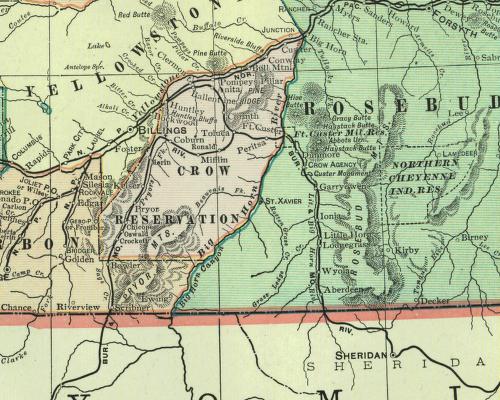
Map is from 1903. Note that Crow Reservation from 1903 has diffferent boundaries. Between Big Horn River and Northern Cheyenne Reservation there is no Crow Reservation. However, we know chief Rocky Boy was ceded Crow Reservations north portion. Much of Crow Reservation had already been allotted. Some allotments were sold to whites who established Lodge Grass and Wyola. Also note that Crow Reservation extends north to Yellowstone River. Supposedly the north portion of Crow Reservation was ceded on June 10, 1896.
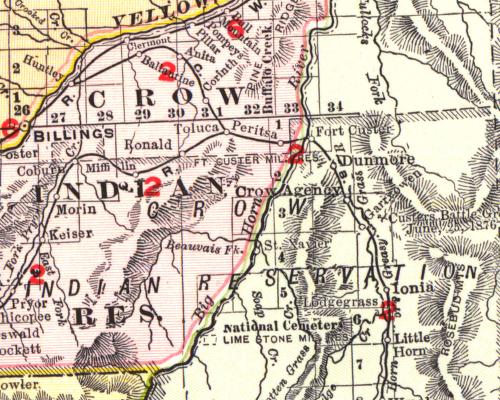
A later map from 1908 appears to try and correct the 1903 maps. You'll need to look at the 1908 map carefully. You'll see the 1903 boundaries and Crow Indian Reservation and Crow Reservation. Look for number 34. You'll notice a thick boundary line.
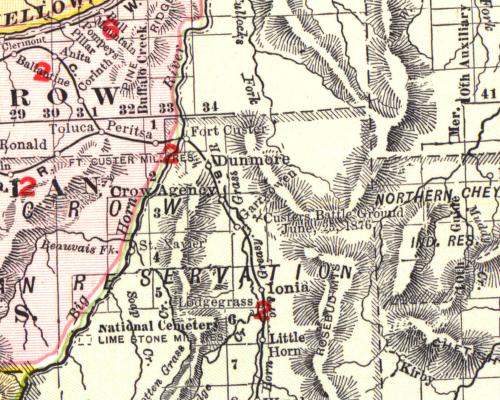
A better view of the 1908 map is obtained with this copy that's further east. The thick boundary line extends east to Crow Reservations east boundary then south to Northern Cheyenne Reservation. Did you notice anything peculiar? Crow Reservation extends north to Yellowstone River. Remember that Crow Reservations north portion was supposedly ceded on June 10, 1896.

Clearly written on the map is "Nor Shoshone Ind. Reservation." Note that Tongue River is well to the east. Also note that Ashland and Birney were white towns. Around 1884, St. Labre Catholic Indian School was established at Ashland. Chief Rocky Boy led some of his Ojibwa Subjects to the Ashland and Birney regions in 1900/1901. An Ojibwa Enclave was established near Ashland. An Ojibwa village was established north of Birney.
Demographics of Crow/Northern Cheyenne Reservation
Land Area: 5,000 sq. mi. or 8,046 sq. km. (?)
Population: 11,388 (2020 census)
Ojibwa's: 83.1% (9,492)
Whites: 12.7% (1,450)
Mixed Bloods: 3.9% (390)
Mexicans: 2.27% (227)
Blacks: 0.1% (9)
Asians: 0.1% (11)
Language: Corrupted
